Industry Special Space 2024
The space industry continues to extensively use metal Additive Manufacturing for propulsion systems, vehicles, and satellite components.

The space industry continues to extensively use metal Additive Manufacturing for propulsion systems, vehicles, and satellite components.
Basis for the AMPOWER Report 2024 are personal interviews as well as secondary research from publicly available sources. The personal interviews were conducted directly by AMPOWER staff. The respondents were typically the respective Additive Manufacturing managers or directors with insight into the technological as well as economical company figures.
The degree of industrialization of metal Additive Manufacturing is assessed in the following by the average utilization of machine capacity at users as well as the type of product the users manufacture in their specific vertical. AMPOWER differentiates between 20 metal Additive Manufacturing technologies. While each technology is at a different stage of technological and industrial maturity, every industry has developed to a different level as well. Medical and Dental have fully embraced metal Additive Manufacturing and have started with the production of end parts since more than a decade ago. Extensive knowledge on qualification of production equipment and validation of production processes was gained by the players in these industries. Paired with excellent business cases, the healthcare industries profit from use of metal AM and can be regarded as main driver for the industrialization of the technology.
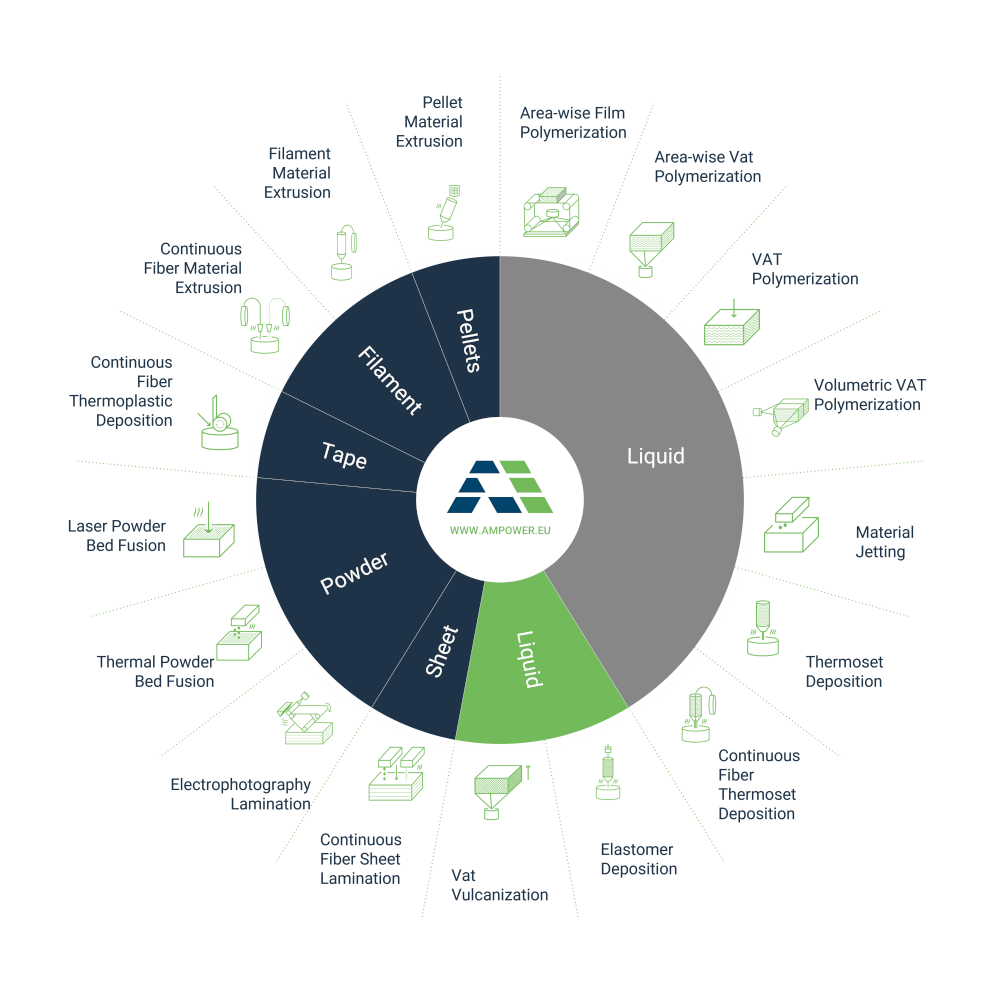
The spectrum of polymer Additive Manufacturing technologies has become immensely wide and is continuously increasing. As of today, 17 different working principles are known with over more than 300 vendors supplying machines. To successfully implement polymer Additive Manufacturing, the printing process and its material properties must be understood. AMPOWER provides an overview of the different technology principles regarding process chain, part and material properties and maturity.
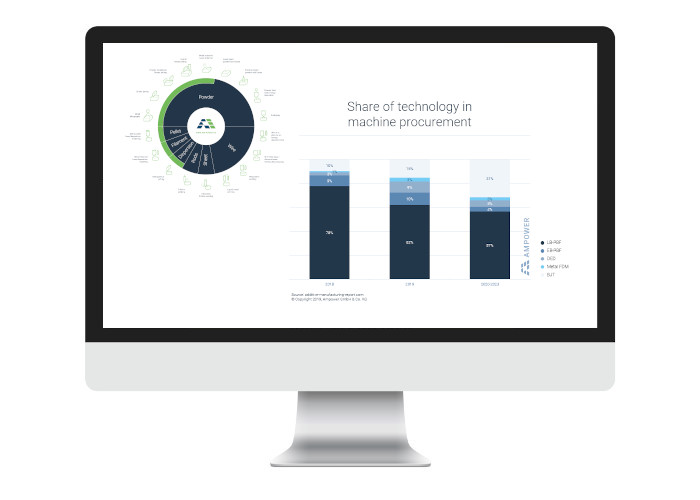
The following sections segments the unit sales and revenue by the main metal AM technologies. Powder Bed Fusion is today by far the leading the technology with most sales and system vendors worldwide. However, other technologies catch up and become an viable alternative for users future production facilities of series parts.
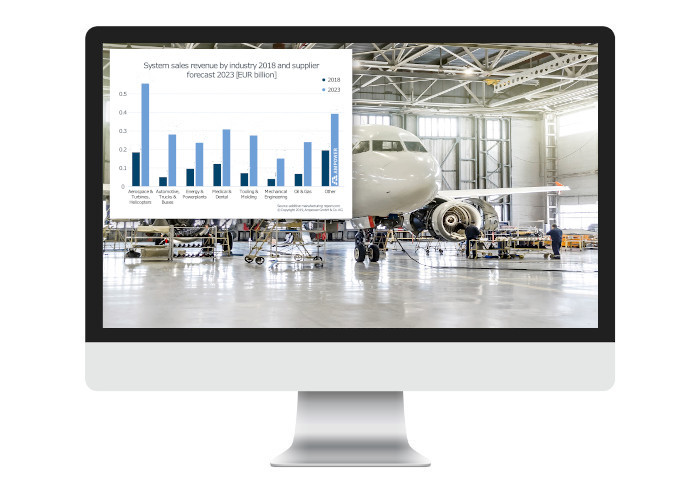
Various industries have successfully adopted metal Additive Manufacturing. Medical and dental have fully embraced the technology and exploit its potential in daily serial production. However, today others lead the field in sales. The AMPOWER Report segments the whole market into the industries of “Automotive, Motorsports, Trucks, Buses”, “Civil Aviation, Turbines, Helicopters”, “Defense”, “Space”, “Medical”, “Dental”, “Energy, Powerplants”, “Oil and Gas”, “Industrial”, “Tooling, Molding”, “Part Manufacturing Service”, “Research Institutions”, “Consumer Goods”, and “Other”. The vertical of “Part Manufacturing Supplier” was added with this year’s report to provide a better overview how many systems are delivered to entities that act as component suppliers to multiple industries.
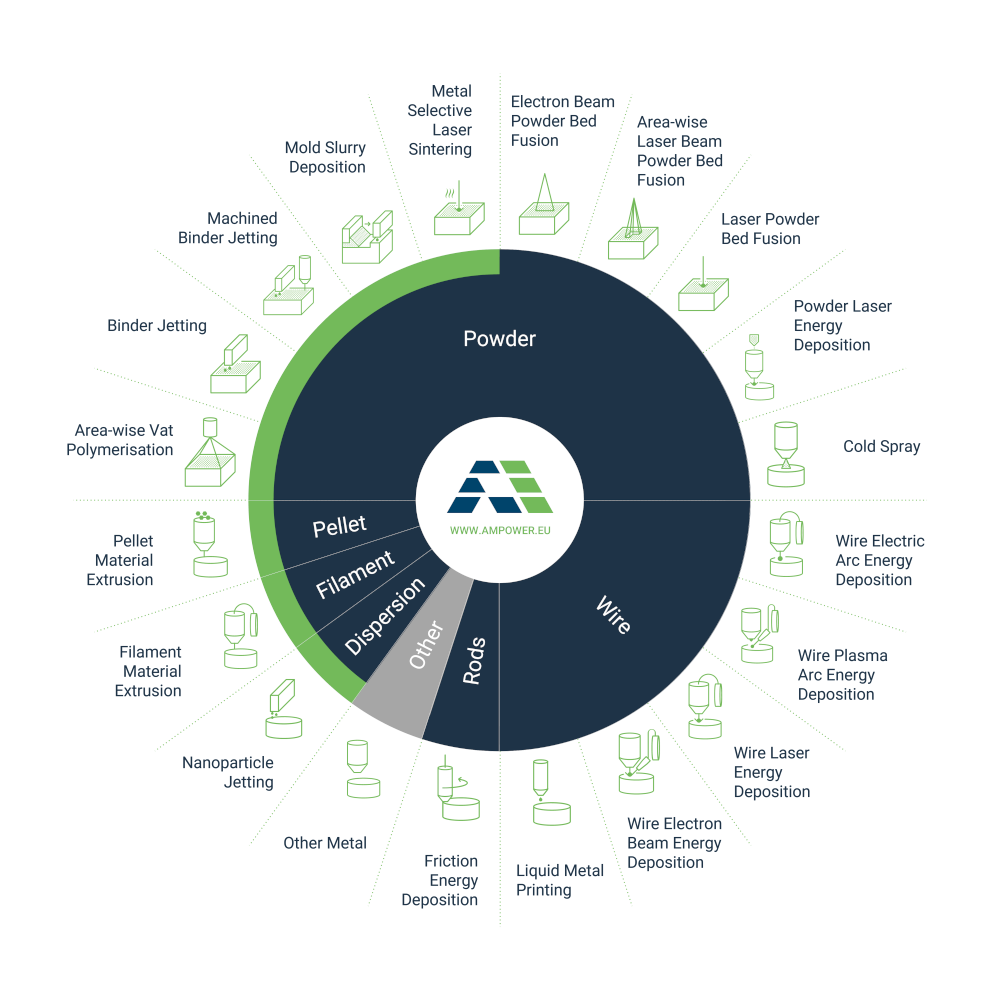
The diversity of metal AM technologies has steadily increased in recent years. Currently, over 20 distinct working principles exist, with about 200 OEMs supplying equipment. The large variety of working principles can be roughly grouped into powder bed fusion, energy deposition and sinter-based metal AM technologies. Each group and individual technology principle bring their own advantages and challenges regarding material choice, geometrical freedom and post processing. AMPOWER provides a closer look at the latest developments of the most relevant technologies in its technology section of the AMPOWER Report 2024.
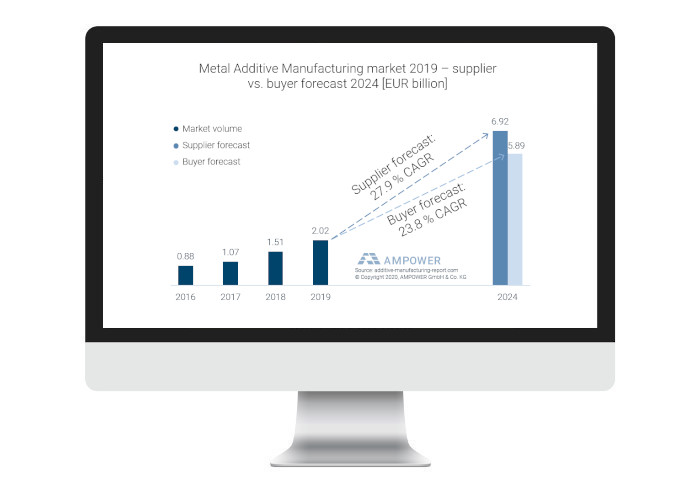
Polymer additive manufacturing, also known as 3D printing, is a rapidly growing technology that has revolutionized the way we design, prototype, and manufacture products. The technology has found widespread applications in a variety of industries, including aerospace, automotive, medical, and consumer goods. In this chapter, we will explore the size of the polymer additive manufacturing market, including its current state and future growth prospects. In 2023 the market reached revenues of more than EUR 5 billion through sales of equipment, material and part manufacturing services. The suppliers forecast a strady growth.
Various industries have successfully adopted polymer Additive Manufacturing. Consumer Goods and Automotive are using the freedom of AM to increase the comfort of their products by designing lattice structures. The AMPOWER Report clusters industries into the categories of “Civil Aviation, Turbines, Helicopters”, “Defense” “Space” “Automotive, Motorsports, Trucks, Buses”, “Energy, Powerplants”, “Oil, Gas”, “Medical”, “Dental”, “Industrial”, “Tooling, Molding”, “Naval, Rail”, “Part Manufacturing Suppliers”, “High Tech”, “Research Institutions”, “Consumer Goods” and “Others”. The following chapter will describe the polymer Additive Manufacturing market from the perspective of these verticals.
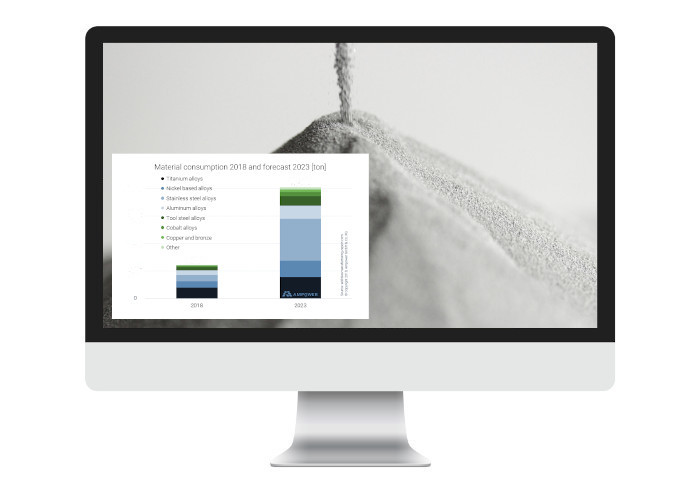
The polymer Additive Manufacturing material market is expected to significantly grow in the coming 5 years. Few industries especially drive the material consumption.
Over the next years, it is expected that the material market will adapt more and more to the properties required by the applications. The extended material portfolio within all printing categories will eventually enable the development of new applications. Further material development will contribute to the maturing of the polymer market.
You are currently viewing a placeholder content from Hubspot Meetings. To access the actual content, click the button below. Please note that doing so will share data with third-party providers.
More Information